Wargame Mechanics Index

Reactions & interrupts

Non-phasing units may react, overwatch or interrupt.

Open in the index

Watch it played 4 moments

  • 8:19–9:25
    Band of Brothers Crossfire Wargame
    Little Wars TV
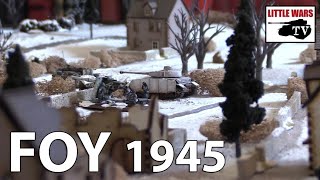
    Rule in play Crossing the road under reactive fire

    Greg attempts a group move across an open road, triggering Tony's reactive fire from two German-held buildings. Tony rolls hits that suppress one squad and pin another, interrupting the advance and seizing initiative.

  • 10:58–12:05
    Bolt Action St. Nazaire Wargame
    Little Wars TV
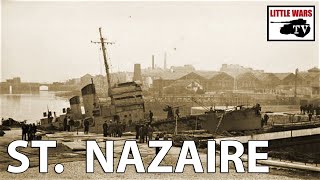
    Rule in play Ambush fire snipes commando squad leader

    As British commandos rush forward, a German heavy machine gun team reveals itself from an ambush order to open fire at point-blank range through cover. After rolling hits, a roll of six followed by another six triggers the exceptional damage rule, allowing Keith to eliminate the commando squad leader directly.

  • 15:19–17:02
    Deadly Fallujah Wargame
    Little Wars TV
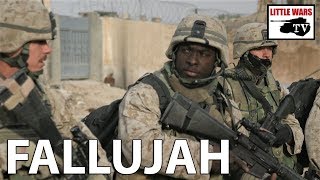
    Rule in play Suicide Bomber Triggers Reaction Roll-Off

    When Iraqi civilians approach Marine positions, the insurgent team deploys a hidden suicide bomber, prompting an opposed reaction roll to determine whether the vest detonates before Marines can open fire.

  • 2:49–3:15
    Bolt Action Rule Review
    Little Wars TV
    Rule explained Six order types and ambush interrupts

    Miles lists the six discrete orders an activated unit can take using its order die, highlighting how the ambush order enables interrupting enemy movement.

Moments picked automatically, by AI watching the video or reading its captions, and linked at the timestamp on YouTube. Quotes are from the captions.

How games do it 19 games

3turn
Ekdromoi and Defensive BelosHoplomachia

Hoplite lochoi under fire may send out young men to chase skirmishers; held fire can be loosed at chargers.

How it works

A lochos under fire may voluntarily (or on a K belos result) release Ekdromoi: roll 1D6 for inches moved; if they reach the shooters roll on the Ekdromoi chart (vs psiloi 1-5 kills the belos unit, vs peltastes 1-3, vs hippeis 1-2; otherwise the ekdromoi die). A lochos that loses its ekdromoi cannot generate more and its army loses 1 Arete. Belos troops that held fire may shoot at chargers in the Defensive Belos phase.

Any Hoplite Lochos under fire may attempt to drive enemy shooters away or kill them with Ekdromoi, which represent the youngest, lightly armoured Hoplites amongst them
Download · p. 41, 24 Quote verified
3turn

An unactivated unit can spend its hidden order card to react when an enemy comes near or charges it, with the reaction defined by the card.

How it works

An enemy interacts with a unit when it moves within 3" of its Front Centre or declares an Assault against it. Reacting always needs an Order Check (even when Steady); failure loses the card. Ready allows a facing change or shooting (Shoot-); Assault gives a countercharge meeting halfway, or an interception at the closest point of the enemy's path; Run makes an escape move of at least unmodified Speed with Speed++; Fire shoots with firearms gaining Shoot+; Resist gives Courage+ to resist damage.

When an enemy unit interacts with one of your own, you can always try to react as long as your unit has not been activated on that turn.
Download · p. 11 Quote verified
3turn

Class action cards are claimed by better characters and held to give a free turn at any moment, even mid-turn.

How it works

A drawn action card is placed face up. The next player to draw a character card of at least that class takes it into his hand. It can then give a free turn to any of his characters of that class or higher at any time, even partway through someone else's turn. When several are played at once the superior card goes first, with Indian cards taking priority outside town. Optionally more sets can be added for big games.

He can use each action card to give a free turn to any of his characters of a class at least as high as that on the card at any time; even part way through someone else’s turn.
Download · p. 2, 18 Quote verified
3turn
Charge responsesVictory Without Quarter

Charge targets may Stand and Fire, Form Pike Stand, Evade, Counter Charge or Stand, with random reaction distances.

How it works

Stand and Fire range is rolled (2d6 foot, 1d6 horse; veterans -2, raw +2): if the roll exceeds the charge distance there is no time to fire, and raw units over 12 fire too soon. Hits force a morale test; failure halts the charge at that range. Pike stand vs horse needs the attacker beyond half charge range and a morale pass. Countercharging horse test and move 2d6 toward the charger, halving the rest.

Work out the shooting as normal except that the range will be 2d6 for foot and 1d6 for horse. Veterans subtract two from this roll, while Raw troops add two.
Download · p. 6, 7 Quote verified
2turn

Defenders can hold back movement dice to move again after seeing the attackers' move.

How it works

The Texians may save some or all of their 4 movement dice and roll them in the Texian Reaction Move phase, which follows the Mexican move, letting the garrison shift to threatened walls.

The Texians may save some or all dice to roll on their reaction move.
Alamo Ruleser · p. 3 Quote verified
2turn
Reactions (Parry, Dodge, Stand Fast)Blood on the Sands: Training Grounds (Quick-start)

The defender spends unspent dice during the opponent's activation to react.

How it works

Defence Rolls are always made, but a DEFENCE Die adds the shield Parry Bonus (+2 parmula, +3 scutum) once per attack and each extra DEFENCE Die adds +1 Dodge; Stand Fast spends a DEFENCE Die to refuse to withdraw. Banked Defence Tokens can be used in place of dice. Reactions must be declared before the defence roll.

While a gladiator may not perform their own Actions out of turn, they can respond to their opponent’s action with Reactions (such as spending DEFENCE Dice, for example).
Download · p. 15, 19, 20 Quote verified
2turn
Hero PointsHail of Fire

A hidden pool of Hero Points lets teams reactivate or act during the opponent's turn.

How it works

Before the game each player secretly rolls 1d6 Hero Points (1-2 count as 3). They can be spent to activate Teams normally, to activate Teams that already acted, or to act between enemy activations. If the coloured Hero Die among the Order Dice rolls a 6, the player discards remaining Hero Points and secretly rolls a new total with no minimum. An optional rule lets a Hero Point interrupt a vehicle mid-move to fire at a point on its path.

They may also activate Teams already activated this turn, or activate Teams during the opponent's Turn (after an enemy activation resolves, before the next begins).
Download · p. 5, 34 Quote verified
2turn

Held action cards grant free turns at any time, even mid-way through an opponent's turn; aiming characters get a hasty shot if their target moves.

How it works

A held action card can give a free turn to a character of at least the card's class at any moment; when several are played together the superior card goes first. A character who Aims names a target; if he gets another turn before the target moves he makes an aimed shot, and if the target moves or ducks he may immediately make a hasty shot.

give a free turn to any of his characters of a class at least as high as that on the card at any time; even part way through someone else's turn.
Download · p. 11, 13 Quote verified
2turn
Interrupt cardsLongstreet Lite

The passive player may play one interrupt card per turn to disrupt the active player's actions.

How it works

Interrupts are played immediately after the enemy invokes (and modifies) a phase, or at the start of the enemy's turn as specified. Examples: Old Rivals stops one enemy unit moving; Pinkerton forces a Federal combat phase to become a pass; Obsolete Muskets gives -1 to enemy volleys.

A card with the kepi symbol in its banner is an interrupt card. Only the passive side may play it for effect. Doing so interrupts some action or activity in the active player’s turn.
Download · p. 10 Quote verified
2turn
Opportunity Fire and Covering FireMicro Armour: The Game - WWII (2nd Edition)

Unfired stands can shoot at moving enemies, and the mover's own firing-posture stands can answer that fire.

How it works

Firing or fire/move stands (+3) that have not fired may halt a moving stand and resolve a standard attack. Any S, (S) or D result forces the mover to pass cohesion or stop for the turn. Each stand suffers only one opportunity fire attack per phase. Opportunity fire in turn triggers covering fire: the moving player's unfired firing-posture stands may attack the opportunity firers at +3.

“Covering fire” (CF) is a variation of standard fire, but is triggered by enemy opportunity fire in the Movement Phase.
Download · p. 28 Quote verified
2turn
Got You Covered! / Snap ShotsRuthless

Characters can hold fire to shoot at a moving enemy, or play a card to shoot first or duck when targeted.

How it works

Got You Covered! is an action that places a marker; the character may later take one un-aimed shot at any enemy taking a Move action in line of sight. Snap Shot: when about to be shot or engaged in Fisticuffs, play any card higher than the opponent's initiative card to take a single un-aimed shot first or move 3" toward cover; the opponent cannot counter-play.

You succeed by playing any card from your hand that is higher than the one the opponent used for initiative at the start of the current turn. Opponents cannot play a card of their own to react.
Download · p. 1, 2 Quote verified
2turn

Imperial units may attempt to act out of turn in a crisis.

How it works

The rule gives Imperials a chance to act when it is not their turn, e.g. against a Mahdist breakthrough; failure makes things worse. Good troops often succeed, bad ones collapse.

The Imperials have an 'Emergency Response' rule, which allows them a chance to act when it's not really their turn; if they fail, things get worse for them.
Download · p. 9 Quote verified
2turn
Time of Fire (fire during enemy movement)They Died For Glory

Infantry and mitrailleuses fire only during the enemy's movement phase, at any moment they choose.

How it works

Small-arms fire is taken in place of movement and happens during phases 5 and 11 while the opponent moves, so the firer can wait for the best moment. Units that contact an enemy during the enemy's first movement operation may only fire once because they are then in melee.

Infantry and Mitrailleuses may fire at ANY TIME during the enemy's movement (Phases 5 & 11). Remember that fire is taken in place of movement.
Download · p. 15 Quote verified
2turn

An NPC that spots a Ninja can raise the alarm, immediately activating nearby NPCs.

How it works

Each NPC rolls once per action to spot. On spotting it may close and attack or call 'Ninja!', ending its activation; the call generates noise and immediately activates every NPC within 12" or in line of sight (24"). Only one call per turn.

Calling “Ninja!” gains the spotted Ninja Noise tokens (see below) and every NPC within 12” of the call or in line-of-sight (24”) is immediately activated.
Download · p. 2 Quote verified
1turn
On GuardFUBAR

Units on guard may fire once per turn at enemy moving across their field of fire.

How it works

On Guard is a 0" action, and also the default state of units that fail activation (unless over 50% casualties). An On Guard unit can react once per turn by firing at enemy movement across its field of fire (LWTV edition: at enemy move or fire).

On Guard 0" Can react once per turn by firing at enemy movement across their field of fire.
Download · p. 1 Quote verified
1turn

Stands that skip moving and firing gain an Overwatch token to fire during the enemy's movement.

How it works

A stand that neither moves nor fires in its own turn is marked with Overwatch. During the enemy Movement phase it may spend the token for an immediate round of normal fire at -1, resolved before the mover's own Fire phase.

During the enemy Movement phase, any of your stands may expend their Overwatch tokens to conduct an immediate round of fire using the standard Fire procedure.
Download · p. 4 Quote verified
1turn

Ranged units may opportunity-fire on enemy regiments activating in range, by day only.

How it works

A ranged unit may interrupt an enemy activating within its range at any point in that movement. It can do so each time a new enemy regiment activates in range. Opportunity fire is only allowed in Daytime phases.

Units with ranged fire may interrupt an enemy unit activating within their range during the opponent’s turn.
Download · p. 5 Quote verified
1turn

Artillery can hold its fire to shoot during the enemy's bound instead.

How it works

A stationary artillery unit places an HF marker instead of shooting, letting it shoot in the opposing side's Shooting Phase. Removing the marker costs its own phase's shot. Shooters may also fire at units charging into contact with them.

An artillery or ballistae unit can Hold Fire instead of shooting, by placing a ‘HF’ marker in the artillery hex. This enables the artillery to fire during the Shooting Phase of the opposing sides bound.
Download · p. 21, 20 Quote verified
1turn
Defensive fire and counterchargeThis Hallowed Ground

Charged units may fire at chargers that start far enough away, and charged cavalry may countercharge or retire.

How it works

The defender shoots at chargers moved to point blank range if they started more than half their move away (v4.4: further than 8"); chargers that become Shaken or Broken fail. No defensive fire into flank or rear arcs. Cavalry charged by cavalry may countercharge, meeting halfway with both counting as charging; v4.4 lets charged cavalry retire before contact.

Defensive fire is resolved by conducting shooting against the charging unit after it has moved to point blank range.
THG 24-pg · p. 13, 14 Quote verified