Wargame Mechanics Index

Support, flanks & overlaps

Adjacent/rear units or flanks modify combat.

Open in the index

Watch it played 4 moments

  • 9:54–11:37
    Learn to Play Live Free or Die
    Little Wars TV
    Rule in play Resolving close combat and bayonet charges

    Tom and Greg calculate combat modifiers for an attacking British regiment with bayonets against Continentals behind a fence, then roll simultaneously and apply results.

  • 13:12–13:58
    9-Player Pyrrhic War Campaign | TURN 2
    Little Wars TV
    Rule in play Greek spearmen strike and morale clock ticks

    Steve calculates combat modifiers for his spearmen supported by pikes against cavalry, eliminating enemy stands and forcing Miles to tick down his army morale clock.

  • 15:19–16:08
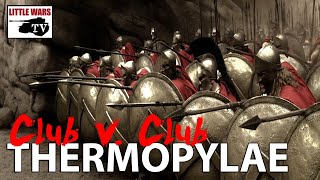
    Club vs. Club Thermopylae Wargame
    Little Wars TV
    Rule in play Supported assault on the Phocian Wall

    Josh spends command points to launch two Persian charges supported by adjacent troops against the Phocian Wall. The Greek defenders roll their defensive combat and repel the assault, inflicting casualties.

  • 16:08–17:45
    Talavera 1809 Napoleonic Wargame
    Little Wars TV · Kriegsspiel (Anleitung zur Darstellung militairischer Manöver mit dem Apparat des Kriegs-Spieles)
    Rule in play British charge on French grand battery

    The British First Division launches an assault across the Portina stream into a French artillery battery, using supporting formations to grant re-rolls while taking defensive fire on the way in.

Moments picked automatically, by AI watching the video or reading its captions, and linked at the timestamp on YouTube. Quotes are from the captions.

How games do it 23 games

2melee
Overlaps, flank contact & rear supportDe Bellis Antiquitatis

Overlapping and flank enemies subtract from a combatant; certain types gain from rear support.

How it works

-1 for each flank overlapped and each enemy in flank or rear contact or aiding a shooter. Rear support by a contiguous element facing the same direction applies when not in bad going (the worked example gives pikes supported by pikes +3; the full factor line is partly lost in the OCR); spears or blades fighting mounted or attacking a camp add +1 if supported by psiloi behind. An element attacked in flank or rear while fighting to front fights only its frontal opponent.

- 1 for each flank overlapped, and/or each enemy element in contact with flank or rear, or for each 2nd or 3rd element aiding a shooting enemy.
Download · p. 9, 10, 11 Quote verified
2melee
Gaps, Lapping and FlanksHoplomachia

Gaps and exposed unshielded sides weaken lochoi; lapping units strike flanks that can hit willpower directly.

How it works

A gap over 1/2" next to an overlapping enemy, or an exposed unshielded flank, gives the Gap modifier (-1 shield). Lochoi overlapping the enemy line may wheel to lap the end lochos. Struck on the shielded flank, the target counts no defensive modifiers and automatically scores no penetration; struck on the unshielded flank or rear, the attack strikes only the Arete Threshold. Routers contacted from more than one direction are slaughtered.

Struck on Unshielded Flank or Rear the charging or lapping unit resolves its Attack as usual, but only strikes the target’s Arête Threshold alone.
Download · p. 43 Quote verified
2melee
Multiple Attacks and Shield WallHordes & Heroes: Ancients & Medieval

Multiple attackers pool their stands, and shield-wall units in a line support each other against recoil.

How it works

Up to six units can attack one unit; the attackers use the highest combat factor and highest impact bonus plus all their undisrupted stands, and all share the result. Units with the S trait in a straight line of adjacent hexes, with both open ends secured by friends or impassable terrain, do not recoil from shooting or melee and need not follow up. Only A-C class troops can form a shield wall, and hordes only between non-horde units.

Units in a shield wall do not have to follow-up after hand-to-hand combat but they have the option of doing so. They do not recoil from shooting or hand-to-hand combat and have no option to do so.
Download · p. 23, 24 Quote verified
2melee

Flank attacks count double and a correctly spaced second line softens defeats.

How it works

Each battalion or squadron able to attack flank or rear counts double when choosing the die; flank attacks require surprise. A cavalry second line 400-800 paces back means the first line cannot be flanked alone and a first defeat counts only as R; infantry second lines at 150-400 paces give a better die against single-line enemies. Second lines too close share the retreat. Routed troops passing through reserves make attacks on those reserves one die worse.

Jedes Bataillon und jede Escadron welche in Flanken uud Rücken angrei- fen kann, gilt doppelt.
Download · p. 61, 63, 64, 65, 66 Quote verified
2melee
Isolated vs supportedLittle Wars

Whether a force has nearby friends decides whether it can be captured in melee.

How it works

A body is isolated if it has fewer than half its own number of friendly men within a move of it; otherwise it is supported. Supported inferior forces trade man for man; isolated ones lose prisoners. Isolated bodies may also surrender at any time.

A man or a body of men which has less than half its own number of men on its own side within a move of it, is said to be isolated.
Download · p. 19, 22 Quote verified
2melee
Flanked / Vulnerable / dice allocationLongstreet Lite

Flanked or limbered defenders are vulnerable, and attackers must spread dice among engaged defenders.

How it works

A vulnerable defender hits only on 6s and attackers get +1 against it. Cover gives attackers -1. An attacker engaging several defenders must allocate dice as evenly as possible, with priority to units in contact and occupying the most frontage; a marginally engaged defender may receive one die.

A vulnerable defender always and only hits on rolls of six, regardless of any possible modifiers.
Download · p. 19, 20, 21 Quote verified
2melee
Flank and rear attacksOi Navarcoi!

Flanked squadrons are unformed and automatically fail their first Battle test.

How it works

A flank or rear attack is only possible if the attacker was already behind the enemy's front before contact. The victim becomes Unformed, automatically fails the first Battle test and tests morale with the Katastrophe malus. The attacker ignores formation differential and first-turn failure effects. Unformed squadrons always fight their first melee turn as if flanked, and a 1-stand squadron facing 3+ stands routs automatically.

A unit flanked/attacked from rear is immediately Unformed and automatically fails the first Battle test.
Download · p. 10 Quote verified
2melee
Rear & Flank AttacksReal Time Wargaming

Attacking an already-engaged enemy in flank or rear gives extra dice and re-rolls.

How it works

If the target is already engaged in close combat from the front, a flank close-combat ATTACK or CHARGE rolls one extra die; a rear attack rolls an extra die and re-rolls misses. This raises the kill chance from 33% to about 80%, and even Close Combat Zero units become dangerous when flanking.

If an enemy unit is already engaged in close combat, and you ATTACK (or CHARGE) it in the rear in close combat, you may roll an extra die when rolling to hit AND re-roll any misses.
Download · p. 6, 5 Quote verified
2melee

Phalangite melee value per stand depends on how many stands remain in the unit.

How it works

With 3 or 4 stands left, each phalangite stand is worth 1.5; with 1 or 2 left, each is worth 1, representing loss of phalanx depth. Subcommanders support as normal commanders do.

If there are 3 or 4 stands left in a unit of Phalangites, each is worth 1½. If there is 1 or 2, each is worth 1.
Download · p. 13 Quote verified
2melee

Flank overlap negates the Drilled frontal armour bonus.

How it works

To negate a Drilled unit's frontal armour bonus, the attacker must have at least half its models overlapping the target's flank and/or rear, judged with a straight edge set 45 degrees from the target's front.

the attacker must have at least half its models overlapping the flank and/or rear of the target unit when it attacks or shoots.
Download · p. 21 Quote verified
2melee

Supporting squadrons join from the second round; losses cascade morale through the regiment.

How it works

A brigaded horse regiment makes one morale test to charge. The first squadron fights the first round; from the second round the squadron behind also fights at the -2 not-charging penalty. On defeat each squadron tests morale in order, with -1 cumulative per previous failure.

In the second and subsequent rounds, the supporting squadron behind the first is also allowed to fight
Download · p. 7 Quote verified
1melee
Multiple attackers2 by 2 Napoleonics

Each attacker gains +1 per extra friendly unit engaged with the same enemy.

How it works

A unit in melee with more than one enemy gives each opponent +1 per extra unit beyond the first (three attackers on one defender each get +2). An HQ in base contact adds +1.

Example, if 3 attackers attack one defender: that means that each attacker gets +2
Download · p. 10, 11 Quote verified
1melee
Situation ModifiersA Coat of Steel

Multiple companies combine strength; flank/rear attacks double; obstacles, slopes and single ranks penalise.

How it works

Several companies vs one combine strength and share casualties proportionally. Striking flank or rear doubles unmodified strength; attacking across a defended obstacle halves the total; being downhill, single-ranked vs multiple ranks, or pushed back last turn denies the card draw. Unengaged lapping companies can wheel onto a flank as a Tired attack.

Any company that is attacking an enemy through their flank or rear facing does so with its unmodified Handstroke Strength doubled (before applying any random card draw).
Download · p. 24, 28, 29 Quote verified
1melee

Unsupported units and flank/rear contact penalise morale.

How it works

A unit is supported if foot in double line or if a second unit is within 200p behind; unsupported units suffer -1. Enemies entirely behind flank or rear give -1, as does each element in combat beyond two.

-1 Unsupported (supported units include foot in double line, and any unit with a second unit within 200p behind)
Download · p. 2 Quote verified
1melee

Secure flanks matter and flank/rear charges are devastating.

How it works

Secure flanks mean another unit within 3" of each flank or a natural barrier; lacking them is a disadvantage vs cavalry. Flank/rear attacks double dice and the target offers no resistance: it tests morale and if it passes the charger rolls for casualties without reply.

The Target of the charge does not get to fight back if charged in the flank or rear.
Download · p. 1, 2 Quote verified
1melee
Multiple units in combatFrozen Chosin (Command Post)

Extra attackers add Firepower.

How it works

When several units attack one defender, the defender picks which one to face, and each excess attacker (up to 3) gains +1 Firepower.

If multiple units attack a single defender, the defender chooses whom to face and each excess unit (up to 3 are possible) gains a +1 Firepower bonus in the combat.
Download · p. 5 Quote verified
1melee
Supported / overlapsLegio VI Julia Augusta

Overlapping bases fight and units directly behind add a support die.

How it works

Engaged bases include one overlapping base per flank. A unit is supported (+1 die) with an unengaged, unshaken unit of the same type directly behind within 1" with at least half as many stands; legions get +1 per line facing the same way; wedges with a third rank count as supported.

A unit counts as supported if formed infantry or cavalry has another unengaged and unshaken unit of the same type (formed infantry or formed cavalry) directly behind the engaged unit, no more than 1” away
Download · p. 7 Quote verified
1melee
Outnumbering / two units attacking oneLoose Files and American Scramble

Numerical odds and flank attacks modify combat; multiple attackers average their factors.

How it works

Outnumbered -1, 3:2 -2, 2:1 -3, 3:1 or more -5, counting one cavalry figure as three infantry and one gun as six. Attacked in flank or rear -3. When two units attack one, the attackers total their factors and divide by two, using the highest grade for training comparison.

For two units attacking one, the attackers total up all their factors and divide by two.
Download · p. 28 Quote verified
1melee

Penalties for being outnumbered, attacked from the rear, uphill or across obstacles.

How it works

Each attack is a d6 at or under Melee rating, with at least one attack against an enemy directly in front. -1 Melee across an obstacle or uphill; -1 Armor if attacked from the rear; -1 Melee if engaged by multiple enemies (except in Shield Wall).

-1 Melee rating if engaged by multiple enemies (except in Shield Wall)
Download · p. 16 Quote verified
1melee
Flanks and overlapsRitter (work in progress)

Flank attacks always kill, overlapping both sides kills, and cavalry need overlap on only one side.

How it works

Flank attacks are decisive for all types; any type overlapping an enemy stand on both sides kills it; cavalry kill with a single overlap; bow fire with two overlaps kills frontally; infantry in works cannot be killed frontally.

All types kill if they overlap the enemy on both sides Cavalry kills if they overlap the enemy on one side
Download · p. 103, 104 Quote verified
1melee
Multi-Unit Combats and Enfilade AttacksThey Died For Glory

Several units may fight one melee with casualties split proportionally; flank and rear bonuses exist only as an optional rule.

How it works

Each unit rolls separately and divides dice when modifiers differ; casualties are spread evenly among defenders by size. In the basic game there is no bonus for flank or rear contact. Optionally +1 for flank and +2 for rear hits (modifier cap +2), with geometric tests for whether an attacker starts on the flank.

An attacker does not receive melee benefits for hitting a unit in the flank or rear (but see OPTIONAL RULES regarding enfilade attacks).
Download · p. 20, 24 Quote verified
1melee
Supported unit / multiple units engagedThis Hallowed Ground

Nearby friends and secondary units in a melee add rerolls or extra dice.

How it works

In v4.4 a unit with 2+ unengaged Steady or Worn friends within 6" may reroll one die on a morale test. When several units are engaged, one is primary and the others add half their base dice; infantry supporting artillery add half their dice and absorb one hit in three.

Supporting units only contribute ½ of their base dice (rounding up) to the melee.
Download · p. 2, 4 Quote verified
1melee
Counting bases: touching, overlapping, rear rankWars of Alexander the Great

Bases touching or overlapping the enemy fight, plus second-rank bases of block formations; flanks and rear reduce dice.

How it works

Any base touching or overlapping an enemy base rolls, plus second-row bases in a block behind a fighting front base. A unit attacked in the flank counts only one base; attacked in the rear it counts half its bases (rounded down), or just one if engaged front and rear. Theban columns count half the third rank; hoplite vs hoplite overlaps count only on the unshielded side.

Any bases which are touching or overlapping an enemy base count in the fight ... together with any bases in the second row of a block formation which are behind a base fighting in the front row.
Download · p. 6, 9 Quote verified